Master the biting cold of an Ontario November by learning the essential techniques for keeping comfortable during an Algonquin Park backcountry adventure.
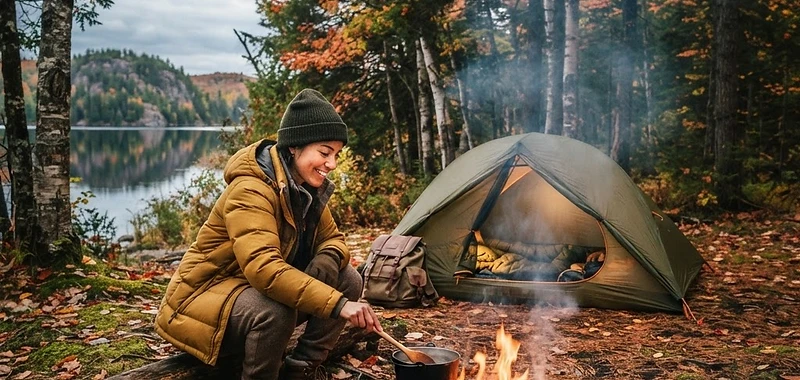
The transition from vibrant foliage to the skeletal beauty of late autumn in Algonquin Park is breathtaking, but it brings temperatures that can plummet well below freezing overnight. When the crowds disperse and the park returns to its quiet, rugged roots, you have the wilderness to yourself—provided you know how to keep the frost at bay. By prioritizing warmth management over sheer gear volume, you can turn a challenging frost-covered morning into an invigorating outdoor experience.
The Three-Layer Rule for Bedtime
Many campers make the mistake of wearing their damp daytime hiking clothes to bed. Moisture is the enemy of warmth. Before tucking into your sleeping bag, change into a completely dry base layer made of merino wool or synthetic materials. Merino is particularly effective, offering warmth even if you happen to get a bit sweaty. Consider an investment of roughly $120 CAD for a high-quality set that will last through many seasons.
🏨 Find hotels and places to stay in Algonquin Park
Maximize Your Sleeping System
Your sleeping bag rating is only a baseline. To stay warm in late autumn, you need a pad with a high R-value (4.0 or higher is recommended) to prevent the cold ground from sapping your body heat. Place an additional closed-cell foam mat underneath your inflatable pad for a "double-decker" insulation effect. This creates a thermal barrier that is crucial when the ground temperatures drop near the freezing mark.
Fuel Your Internal Furnace
Eating a high-fat dinner right before bed keeps your metabolic "engine" running through the night, generating heat as your body works to digest the meal. A handful of walnuts or a piece of high-quality dark chocolate before zipping up can make a noticeable difference in your ability to maintain a stable core temperature until dawn.
🚗 Compare rental cars for your Ontario trip
Warmth Hacks for Your Sleeping Bag
If you find yourself shivering, fill a leak-proof Nalgene bottle with hot water, place it inside a sock, and tuck it near your feet or between your thighs. This provides a steady source of radiant heat for several hours. Just ensure the lid is screwed on tight to avoid a damp sleeping bag, which would ruin your warmth strategy instantly.
Navigating the Park
Algonquin is expansive, covering over 7,600 square kilometres. If you are flying into the region, Pearson International Airport (YYZ) is roughly a three-hour drive from the West Gate. Late autumn requires careful planning regarding park access, as some interior access points may begin to close or become muddy due to seasonal rain and frost. Always check the park’s official website for closure notices before heading out.
🎟️ Browse tours and activities in Algonquin Park
Essential Late-Season Gear
- Wool Beanies: You lose a significant amount of heat through your head, so keep a toque on while sleeping.
- Buffs: A neck gaiter helps seal the top of your jacket to prevent cold air drafts.
- Hand Warmers: Keep a few air-activated packs in your jacket pocket for those moments you need to remove your gloves to set up camp.
Start Planning Your Trip
Ready to embrace the crisp air of Algonquin? Start your journey by securing your base camp or backcountry permit early, as sites remain popular even in the off-season.
Ready to explore Canada's most popular destination?
Turquoise lakes, soaring peaks, and the Rockies' most iconic sights await in Banff, Alberta — our most-read destination guide.
Explore the Banff Destination Guide