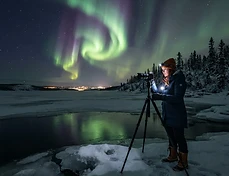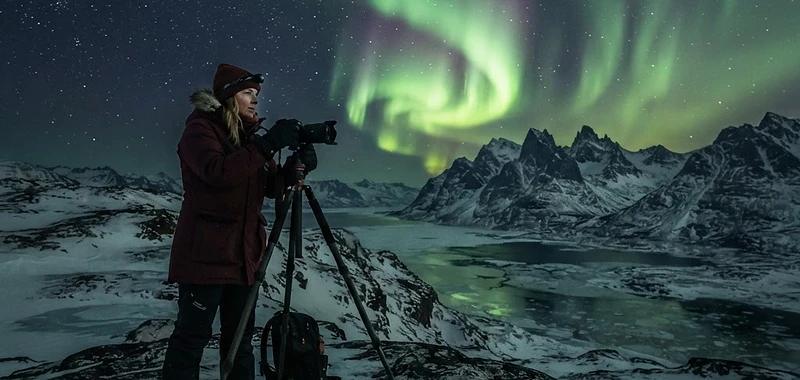
Master the art of capturing the ethereal Aurora Borealis in the high Arctic. Learn how to prepare for the extreme conditions of Nunavut for the ultimate light-show photography.
The horizon in Nunavut doesn't just glow; it dances in ribbons of violet and electric green against a backdrop of silence so profound it feels prehistoric. Capturing the Aurora Borealis in the high Arctic is a bucket-list achievement, but it requires more than just a DSLR and a tripod—it demands respect for the environment and an understanding of extreme cold. ## Gear Up for Sub-Zero Conditions When temperatures plummet to -40°C in places like Iqaluit (YFB), your standard camera batteries will drain in minutes. You must keep spare batteries inside your base layers, close to your body heat. Invest in a sturdy tripod, as the Arctic winds can be fierce and will ruin a long-exposure shot with even the slightest vibration. 🏨 Find hotels and places to stay in Iqaluit You will also want to practice operating your gear while wearing heavy mittens, as exposing bare skin to metal camera bodies for more than a few seconds can result in instant frostbite. ## Choosing Your Location Near Iqaluit and Rankin Inlet (YRT), light pollution is minimal, but you still want to get away from the town center to capture the true magnitude of the sky. Always hire a local guide; they possess the ancestral knowledge of weather patterns that satellite apps often miss. 🎟️ Browse tours and activities in Nunavut For those flying in via Canadian North or Calm Air, consider base-camping in a community where you can easily reach open tundra away from artificial glow. ## Master the Technical Settings Forget auto-mode. To capture the lights, you need manual control: - Aperture: Set to the widest possible setting (f/2.8 or lower). - ISO: Start at 1600 and adjust based on the intensity of the lights. - Shutter Speed: Keep it between 5 to 15 seconds. Longer exposures might blur the movement of the curtains. 🚗 Compare rental cars for your Nunavut trip Remember to turn off your image stabilization, as it can sometimes cause micro-blur on a tripod. ## Safety First in the High Arctic Never venture onto the tundra alone after dark. Polar bears and rapidly changing blizzard conditions are real threats. Always file a travel plan with a local outfitter and ensure your satellite communication device is fully charged. The Arctic is magnificent, but it remains one of the most unforgiving environments on Earth. ## Start Planning Your Trip 🏨 Find hotels and places to stay in Nunavut 🎟️ Browse tours and activities in Nunavut 🚗 Compare rental cars for your northern trip 📝 Plan your flight route with local carriers
Ready to explore Canada's most popular destination?
Turquoise lakes, soaring peaks, and the Rockies' most iconic sights await in Banff, Alberta — our most-read destination guide.
Explore the Banff Destination Guide