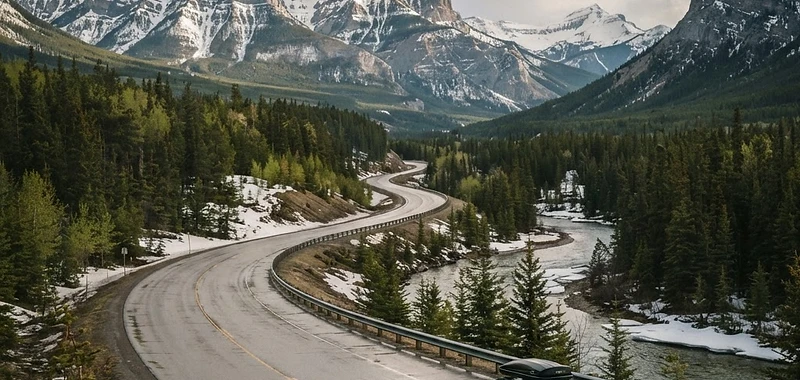
Driving the legendary Trans-Canada Highway in spring requires a shift in strategy as the landscape thaws. Master the conditions with these five expert tips for a safe and scenic journey.
As the frost retreats from the pavement and the first signs of green emerge across the Great White North, the 7,821-kilometer stretch of the Trans-Canada Highway beckons. However, spring travel is a game of patience and preparation, where you might encounter sun-drenched prairies in Manitoba and sudden snow squalls in the Rockies within the same week.
1. Prepare for 'Pothole Season'
When the ground thaws, the road surface pays the price. You will notice increased road crews and rougher terrain, particularly in Northern Ontario. Ensure your tire pressure is monitored and your suspension is checked before leaving your home base. 🚗 Compare rental cars for your Canada-wide trip to ensure you have a vehicle capable of handling uneven pavement and lingering debris. Budget roughly $150 CAD for a professional pre-trip inspection to avoid costly repairs mid-route.
2. Master the Mountain Passes
If your route takes you through the Kicking Horse Pass or Rogers Pass in British Columbia, remember that winter tires are legally required on most BC highways until April 30th. Even if you arrive in mid-April, do not switch to summer tires yet. Weather shifts rapidly near YVR and YYC. 🎟️ Browse tours and activities in Banff to understand the local micro-climates before driving through the high alpine sections.
3. Book Accommodation Well in Advance
Spring is a transitional period where many seasonal lodges remain shuttered, limiting your options between major hubs. Always secure your lodging before reaching your daily destination to avoid ending up at a closed facility. 🏨 Find hotels and places to stay in Calgary to serve as your basecamp before tackling the mountain portions of the route. Prices for mid-range motels typically hover between $140 and $190 CAD per night during the shoulder season.
4. Prioritize Daylight Hours
Wildlife, particularly moose and deer, become hyper-active along the roadside as vegetation begins to sprout in the spring. These animals are most active at dawn and dusk. Plan your drive to be completed by early afternoon to avoid the high-risk night driving hours. If you find yourself in the Maritimes, be extra vigilant between Moncton and Halifax, as spring mist can reduce visibility significantly.
5. Embrace the Mud Season Gear
If you plan on pulling over to hike segments of the Great Trail that intersect with the highway, you must be prepared for extreme mud. Pack waterproof hiking boots and gaiters. If you are starting your journey in the East, 🏨 Find hotels and places to stay in St. John's for a comfortable landing spot before heading out to the mud-heavy trails of Newfoundland’s coast.
Start Planning Your Trip
Ready to hit the open road? Let us help you organize your journey from coast to coast.
Ready to explore Canada's most popular destination?
Turquoise lakes, soaring peaks, and the Rockies' most iconic sights await in Banff, Alberta — our most-read destination guide.
Explore the Banff Destination Guide