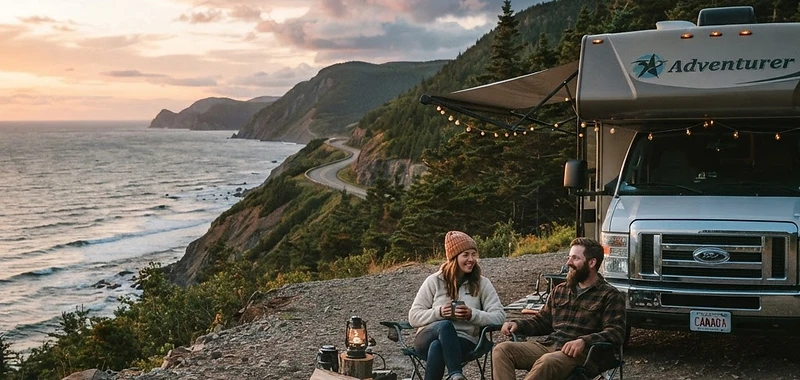
Ready to hit the open road along the Atlantic coast? Discover how to navigate Nova Scotia RV rentals with confidence for your first maritime road trip.
There is no freedom quite like navigating the winding, salt-sprayed roads of the Maritimes with your home hitched to your bumper. From the dramatic cliffs of the Cabot Trail to the gentle, orchard-lined hills of the Annapolis Valley, Nova Scotia is built for exploration by road, and renting an RV is the ultimate way to experience its rugged charm.
Choosing the Right Vehicle
When looking into Nova Scotia RV rentals, size matters. Most first-timers are intimidated by Class A motorhomes, which can be 30 to 40 feet long. For your first journey, I highly recommend a Class C motorhome or a compact campervan. These are much easier to maneuver through historic downtown streets like those in Lunenburg or Halifax.
Before you book, ensure you are comfortable with the height clearance, especially when navigating under older bridges or into coastal park campsites. Budget roughly $200 to $400 CAD per night during peak season (July and August) for a well-maintained rental vehicle. 🚗 Compare rental cars for your Nova Scotia trip if you decide a motorhome is too large and prefer a towing option.
Booking Campgrounds Early
Nova Scotia’s provincial parks are world-class, but they book up fast. Reservations for sites like those in Kejimkujik National Park or Risser’s Beach typically open months in advance. Always look for "serviced" sites if you want water, sewer, and electrical hookups, which make life much easier for beginners.
🏨 Find hotels and places to stay in Halifax for your first night upon arrival at YHZ airport before picking up your RV the next morning. If you plan on visiting Cape Breton, ensure your campsite is reserved at least six months ahead of time to avoid being left stranded without a spot.
Navigating the Maritime Roads
Driving an RV in Nova Scotia is generally stress-free, but you must keep an eye on the wind, especially along the Northumberland Shore. Avoid trying to cover too much distance in a single day. Stick to 200–300 kilometers per day to truly soak in the scenery rather than just watching it pass through the windshield.
If you find yourself stuck or need assistance finding local experiences, check out these resources. 🎟️ Browse tours and activities in the Annapolis Valley to fill your afternoons with vineyard tours and historic site visits once you have parked for the day.
Essential Packing and Prep
- Pack a surge protector for electrical hookups.
- Bring extra leveling blocks; not all pads are perfectly flat.
- Download offline maps, as cell service can be spotty in the Highlands.
- Always carry a dedicated hose for your freshwater tank and a separate one for the black-water flush.
Start Planning Your Trip
Ready to get out on the road? Start your journey here:
🏨 Find hotels and places to stay in Cape Breton 🚗 Compare rental cars for your Nova Scotia trip 🎟️ Browse tours and activities in Lunenburg 🎟️ Browse tours and activities in Halifax
Ready to explore Canada's most popular destination?
Turquoise lakes, soaring peaks, and the Rockies' most iconic sights await in Banff, Alberta — our most-read destination guide.
Explore the Banff Destination Guide