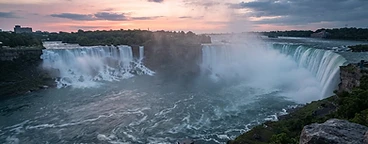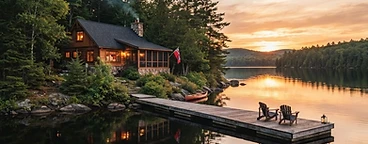
A winter cabin in Ontario is the quietest escape the province offers — a wood stove, a frozen lake out the window and nobody for miles. Cottage country empties after New Year, cabin rates fall, and the snow turns the lakes into a snow-globe. Every region below is a one-and-a-half to three-and-a-half hour drive from Toronto.
This page compares the seven cabin regions on the three things that actually decide a winter trip: how far you drive, how long you are staying and who you are travelling with. Individual cabins are not ranked here, because winter availability turns over every week — so each region carries a live search for cabins there, and a later section lists exactly what to confirm with the host before you pay a deposit.
The short answer: Muskoka is the easiest first winter cabin, Haliburton is the quietest, the Bruce Peninsula is the most dramatic and the most weather-dependent, Algonquin's gateway towns are for park trails, Prince Edward County is the food-and-wine version, Niagara-on-the-Lake is the shortest drive, and the Rideau Lakes are the best value and the easiest from Ottawa.
Cabin regions at a glance
The same four facts for every region, so you can rule a place in or out before reading further. Drive times are from downtown Toronto and assume clear winter roads.
- Muskoka — Drive 2.5 hours (~210 km) · Stay 2–3 nights · Suits couples and families with older kids · Access: district roads plowed fast, lakefront lanes can be steep and are the last thing cleared.
- Haliburton Highlands — Drive 2.5 hours (~200 km) · Stay 3–4 nights · Suits couples and small groups after isolation · Access: main roads plowed, but the last stretch is often a private or seasonal road.
- Bruce Peninsula & Tobermory — Drive 3.5 hours (~300 km) · Stay 3 nights or more · Suits couples, photographers and hikers · Access: Highway 6 is maintained, side roads and harbour lanes drift in lake-effect squalls.
- Algonquin gateway towns — Drive 3 hours (~250 km) · Stay 2–3 nights · Suits families and cross-country skiers · Access: Highway 60 is plowed and patrolled, the trails are not.
- Prince Edward County — Drive 2.5 hours (~200 km) · Stay 2 nights · Suits couples who want wineries alongside the cabin · Access: county roads plowed, gravel side roads and winery lanes treated less often.
- Niagara-on-the-Lake — Drive 1.5 hours (~110 km) · Stay 1–2 nights · Suits couples, especially in ice-wine season · Access: the easiest of the seven, highway and town streets the whole way.
- Eastern Ontario (Rideau Lakes) — Drive 3.5 hours (~300 km), or 1.5 hours from Ottawa · Stay 2–3 nights · Suits budget-conscious and quiet-seeking travellers · Access: township roads plowed, lake and canal-side lanes drift.
Accommodation
Where to stay for this trip
Three of the seven regions carry most winter cabin trips. What separates them is how far you drive, how much is open when you arrive, and whether you are sleeping inside the park or beside it.
Algonquin gateway · Huntsville and Mew Lake
- Suits
- People who want the park itself: Ontario Parks' heated roofed accommodation at Mew Lake sits inside Algonquin.
- Parking
- Park accommodation and gateway cabins have their own parking; the park road is plowed but check conditions before the drive.
- Kitchen
- Park roofed accommodation is basic — plan on cooking gear. Huntsville cabins usually have full kitchens.
- Attractions
- Mew Lake is inside the park; Huntsville is a 40 minute drive to the trailheads and the supply stop.
- Trade-off
- Park cabins are basic and book out far ahead.
Muskoka · Gravenhurst and Bracebridge
- Suits
- Lakeside cabins with a town and a grocery store minutes away, on the shortest drive from Toronto.
- Parking
- Driveway parking, but ask whether the lane is plowed and by whom — an unplowed lane is the commonest winter problem.
- Kitchen
- Lakeside cabins almost always have full kitchens; that is the point of renting one.
- Attractions
- Town, groceries and the highway minutes away; lake access from the door.
- Trade-off
- The most in-demand of the seven regions, so its winter weekends go first.
Bruce Peninsula · Tobermory and the Bruce
- Suits
- The quietest trip on the list: snowshoeing, empty shoreline and no queue for anything.
- Parking
- Private driveway; confirm the road in is maintained and where you clear snow.
- Kitchen
- Full kitchens typical — bring groceries, because the nearest store is a drive.
- Attractions
- Shoreline and snowshoe routes close by, but few services stay open in winter.
- Trade-off
- Longest drive of the three and the fewest open businesses.
Affiliate disclosure: we may earn a commission when you book through these links, at no extra cost to you.
1. Muskoka — lakeside cabins
Muskoka is Ontario's classic cabin country, and in winter the lakeside cabins that command peak summer rates drop to shoulder pricing. Huntsville is the gateway, with private cabins on Peninsula Lake, the Muskoka River and Lake of Bays.
- Drive from Toronto: about 210 km, 2.5 hours via Highway 400 and Highway 11.
- Best for: two or three nights, couples or a family with older kids.
- Cabin type: lakeside with a wood stove; the hot tub is worth paying for here.
- Winter access: district roads are plowed quickly. The exception is the last stretch — lakefront lanes and shared driveways can be steep, shaded and the last thing cleared.
- What to do: snowshoe the frozen lake, cross-country ski at Arrowhead or Limberlost, fireside evenings.
2. Haliburton Highlands
Haliburton, east of Muskoka, is quieter and more forested — off-grid cabins, backcountry lakes and cross-country ski trails. This is the region for total isolation, and for people who are comfortable when the nearest plowed road is a short walk away.
- Drive from Toronto: about 200 km, 2.5 hours.
- Best for: three or four nights. The drive matches Muskoka, but the point of Haliburton is staying put.
- Cabin type: forest cabin with a wood stove, often off-grid.
- Winter access: main roads are plowed; the last stretch is frequently a private or seasonal road, and some cabins are snowshoe-in only.
- What to do: snowshoeing, backcountry skiing, stargazing — there is very little light pollution.
3. Bruce Peninsula & Tobermory
Tobermory, at the tip of the Bruce, is the most dramatic winter cabin escape — snow-drenched cliffs, the frozen Grotto and total quiet. Many businesses close for the season, so stock up before you leave the last town.
- Drive from Toronto: about 300 km, 3.5 hours.
- Best for: three nights or more. This is too far for a single overnight.
- Cabin type: harbourfront or cliff-top cabin with a lake view.
- Winter access: Highway 6 is maintained, but side roads and harbour lanes drift in lake-effect squalls. Winter tires are not optional here.
- What to do: the Grotto hike if ice conditions allow, snowshoeing, winter photography at Halfway Log Dump.
4. Algonquin Park gateway cabins
The towns along Algonquin's western gate — Huntsville, Dwight and Whitney — have winter cabins with direct access to the park's backcountry ski and snowshoe trails.
- Drive from Toronto: about 250 km, 3 hours.
- Best for: two or three nights, families and anyone travelling on skis.
- Cabin type: forest cabin near a park gate, with room to dry gear.
- Winter access: Highway 60 is plowed and patrolled; park access roads are plowed, the trails are not.
- What to do: backcountry skiing on the Leaf Lake and Minnesing trails, snowshoeing, moose spotting at dawn.
5. Prince Edward County — country cabins
Two hours east of Toronto, the County has country cabins near wineries and empty winter beaches. A gentler, more food-driven cabin trip, and the easiest region to pair with a restaurant dinner.
- Drive from Toronto: about 200 km, 2.5 hours.
- Best for: two nights, couples.
- Cabin type: country cabin or converted farmhouse near a winery.
- Winter access: county roads are plowed; gravel side roads and winery lanes are treated less often.
- What to do: winery tastings — many are weekend-only in winter, so check hours first — coastal walks and antique shopping in Picton.
6. Niagara-on-the-Lake — wine-country cabins
Niagara-on-the-Lake has a small selection of wine-country cabins and cottages, and it is the shortest drive on this list. That makes it the only region here that works for a single night.
- Drive from Toronto: about 110 km, 1.5 hours.
- Best for: one or two nights, couples, ice-wine season.
- Cabin type: cottage near a winery. Expect fewer true cabins here than anywhere else on this list.
- Winter access: the easiest of the seven — highway and town streets the whole way.
- What to do: ice-wine tastings, the walkable old town, winter programming at the Shaw Festival.
7. Eastern Ontario — Rideau Lakes
The Rideau Lakes between Toronto and Ottawa have quiet, affordable winter cabins on frozen lakes and the canal — a less-crowded and cheaper alternative to Muskoka.
- Drive from Toronto: about 300 km, 3.5 hours, or 1.5 hours from Ottawa, which is the better approach.
- Best for: two or three nights. This is the best value on the list.
- Cabin type: lakeside cabin, or a cottage on the canal.
- Winter access: township roads are plowed; lake and canal-side access lanes drift and are the weak point.
- What to do: ice skating on the canal, snowshoeing, snowmobiling on OFSC trails.
Before you book: what to confirm with the host
Nothing on this page replaces a message to the host. A listing describes the building; the details below decide whether the trip works in February, and they are usually not in the listing.
Winter road access
- Is the driveway plowed, by whom, and how soon after a snowfall?
- Is the last stretch a municipal road, or a private lane shared with neighbours?
- Are winter tires needed, and is there a hill or steep grade on the way in?
- If it is snowshoe-in: how far from parking, is there a sled, and is the parking area plowed?
- Will the host clear a path to the door, and does the door swing clear of snow?
- Does your phone work at the property? Many rural cabins have no reliable signal.
Kitchens
- Full kitchen with stove and oven, or a kitchenette with two burners and a bar fridge?
- Is the water turned on in winter? Winterized cabins often run on jugs or a seasonal line.
- Gas or electric stove — and does it work if the power goes out?
- How far is the nearest grocery store, and what time does it close?
- What is supplied (coffee, condiments, dish soap, foil) and what should you bring?
Heating
- What is the primary heat: wood stove, propane, electric baseboard or heat pump?
- If wood: is firewood included and seasoned, and does the stove heat the whole cabin or one room?
- Is there a backup heat source if the power goes out? Rural Ontario ice storms knock power out for days.
- Are bedrooms heated individually, and are extra blankets or electric blankets provided?
- If a hot tub is advertised: is it running and open in winter, or drained for the season?
Cancellation terms
- What is the cancellation window, and what percentage is refunded? Cabin terms are typically stricter than hotels, often 30 to 60 days out.
- What happens in a snowstorm, a closed highway or a power outage — refund, credit or nothing?
- How much is the deposit, and when is the balance due?
- Is there a damage deposit, and when is it returned?
- What is the minimum stay, and are cleaning or hot-tub fees extra?
- Can you reach the host by phone during the stay, or only by message?
If a host will not answer these before you book, book somewhere with free cancellation instead.
When to go and how far ahead to book
January through February is the cabin sweet spot: reliable snow, the lowest rates and the deepest quiet. Book six to eight weeks ahead for February weekends, and three to four months ahead for Christmas week and the Family Day weekend.
Early March is the risk window — days above freezing, soft ice and muddy access lanes. If you go then, ask the host about ice thickness and whether the driveway is still passable.
Where to stay in a winter cabin
The cabins in Ontario hub filters cabin-type stays across the province, and cottage rentals in Ontario covers the lakefront rentals that sit outside the cabin category. For the cross-province comparison see Winter Cabin Getaways in Quebec & Ontario, and for the Quebec side alone, Best Winter Cabins in Quebec.
Each region above carries its own live cabin search, so you can price a region before committing to the drive.
Check before you go
Two official pages settle what a listing cannot:
- Ontario Parks day-use permits: daily vehicle permits for most parks go on sale five days ahead and every permit is sold that way, so a popular winter weekend is booked online or not at all.
- Ontario 511: highway conditions and closures on Highways 400, 11 and 60 on the morning you drive.
Park trail and skating-rink status is posted by each park. Check it before the drive, not at the gate.
Planning this around Christmas week
If your dates land on Christmas rather than the shoulder season, the Christmas getaway planning guide has the verified 2026–27 market and festival windows, how many nights each place needs, and two- and three-day plans. To choose between destinations instead, use the Christmas destinations compared by traveller type.