Transitioning from winter to spring in the Canadian Rockies requires preparation, patience, and the right gear to handle the volatile backcountry conditions. Learn how to safely navigate the melt season in Alberta's wilderness.
The Shoulder Season Challenge
The roar of spring runoff in the Canadian Rockies is a siren call for the restless, yet it masks the technical dangers of a shifting landscape. As temperatures fluctuate between freezing nights and balmy days, your success in the backcountry hinges on respecting the 'melt'—the period where avalanche risks, saturated trails, and impassable creek crossings collide. If you are flying into the region, 🏨 Find hotels and places to stay in Calgary (YYC) is a smart first step to acclimatize before heading into the mountains.
Understanding the Terrain
During April and May, Alberta’s backcountry is a mosaic of lingering snowpack, mud, and exposed scree. The lower valleys may appear hiker-ready, but the high alpine remains firmly locked in winter. This means that a trail like the Sentinel Pass in Banff National Park, usually a summer staple, often remains a high-risk avalanche zone well into June. Always check the Parks Canada bulletin before lacing up your boots.
🚗 Compare rental cars for your Alberta trip to ensure you have a vehicle capable of navigating the slushy, unpredictable spring road conditions leading to trailheads.
Gear for the Variable
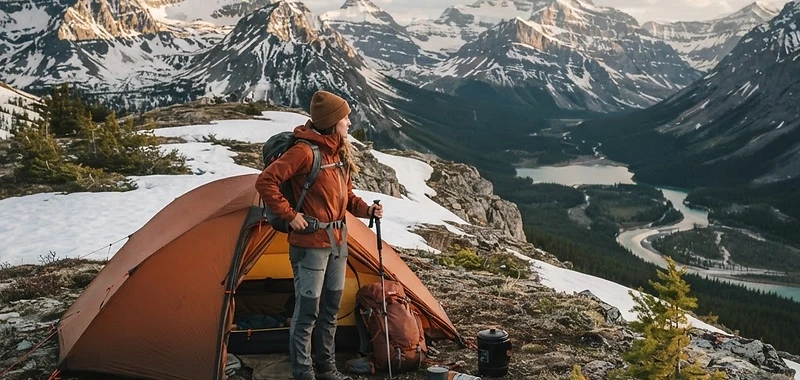
Spring backcountry camping tips start with one non-negotiable: waterproof everything. The snowmelt turns trails into flowing streams, and dry feet are the difference between a successful trip and an early retreat to your vehicle.
Essential Spring Kit:
- Microspikes: Essential for hard-packed, icy sections of trail that haven't melted.
- Gaiters: Protect your pants and boots from soaking mud and slush.
- 4-Season Tent: High winds in the spring can easily flatten a 3-season tent; ensure your shelter is rated for mountain gusts.
- Water Filtration: Snowmelt can be silty and contain seasonal contaminants; bring a reliable filter like a gravity system or pump.
🎟️ Browse tours and activities in Banff and Jasper if you are looking for guided backcountry intro courses to hone your skills in a controlled environment.
Navigating Hazards
Alberta's creek crossings are notoriously fickle during the spring. A dry, knee-deep crossing in August can become a raging, waist-deep torrent by mid-afternoon as daytime temperatures spike and trigger snowmelt. Use trekking poles for stability and never commit to a crossing if you cannot see the bottom clearly. If you are planning to head toward Jasper, 🏨 Find hotels and places to stay in Jasper to use as a basecamp for pre-trip planning and gear finalization.
Wildlife is also particularly active, and bears are waking from hibernation with empty bellies. Ensure you carry bear spray in an accessible holster—not buried in your pack—and practice scrupulous food storage techniques. Bear canisters or hanging gear is required in most backcountry sites to prevent unwanted visitors.
Start Planning Your Trip
Ready to explore Canada's most popular destination?
Turquoise lakes, soaring peaks, and the Rockies' most iconic sights await in Banff, Alberta — our most-read destination guide.
Explore the Banff Destination Guide