The polar bear capital of the world — tundra buggies in October, 3,000 beluga whales in summer, the aurora in winter, and a frontier town 1,000 km north of Winnipeg.
Churchill is the polar bear capital of the world — a town of 900 on the shore of Hudson Bay, 1,000 km north of Winnipeg, reachable only by train or plane. In October and November, the bears gather here waiting for the bay to freeze, and the town becomes the planet's best place to see them. Here's the guide.
The polar bears The reason to come. In late October and November, the bears move toward the coast to wait for the sea ice; the tundra buggies (the giant wheeled vehicles) take you out to the viewing. The bears are close, visible, and in numbers. It's the single best polar-bear experience on earth.
The belugas In summer (June to August), thousands of beluga whales migrate into the Churchill River estuary — 3,000 of them. The whale-watching (by boat, zodiac, or kayak) is world-class. A completely different Churchill than the bear season.
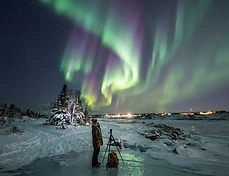
The town and the north Churchill itself is small and frontier — the port, the research centre, the Inuit and Cree communities, the old military fort (Fort Prince of Wales). The northern lights are spectacular in February and March. The tundra, the willows, and the subarctic light are the backdrop.
When to go October–November for polar bears; June–August for belugas and the midnight sun; February–March for the aurora. The 'bear season' books a year ahead — reserve early.
Good to know There are no roads to Churchill — the train (2 days from Winnipeg) or the flight (Calgary or Winnipeg). The town is small; stay is usually a package with a lodge and the tundra buggy. And it's expensive — this is a once-in-a-lifetime trip. Pack for serious cold even in October.
Ready to explore Canada's most popular destination?
Turquoise lakes, soaring peaks, and the Rockies' most iconic sights await in Banff, Alberta — our most-read destination guide.
Explore the Banff Destination Guide